Looking at small excavators going out to sea from the 140th Canton Fair: A Guide for Selection and Factory Inspection for B2B Buyers
The 140th Canton Fair to be held in the fall of 2024 has once again become the focus of attention of global construction machinery buyers. According to official data, this Canton Fair attracted more than 200,000 overseas buyers from 214 countries and regions. Among them, the number of inquiries for Mini Excavators in the construction machinery exhibition area increased by about 35% year-on-year. The domestic small excavator brand represented by RIPPA made a high-profile appearance at the exhibition, marking that China's compact construction machinery is shifting from "price advantage" to global competition of "technology + service." For B2B buyers, how to systematically evaluate small excavator suppliers and match terminal operating conditions outside the exhibition has become the key to reducing procurement risks. This paper combines the industry signals released by the 140th Canton Fair and provides practical reference for procurement decisions from three dimensions: technology configuration, application scenarios and supplier screening.
1. Differences in core technical parameters and configuration of small excavators
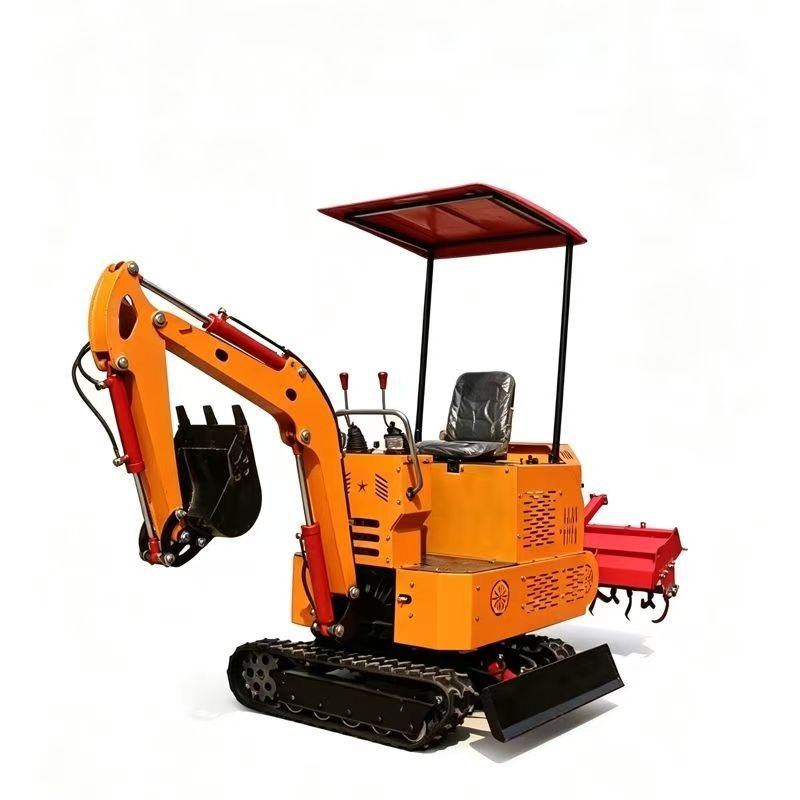
Small excavators usually refer to compact equipment with a total mass of between 1 ton and 10 tons, of which 1-3 tons account for the highest proportion in municipal, agricultural and garden scenes. At the 140th Canton Fair, many exhibitors unanimously emphasized the following technical indicators, and buyers should focus on comparison:
- Engine power and emission standards:Exports to Europe need to meet Stage V, and North America needs to meet EPA Tier 4 Final. Some suppliers use national IV standard engines to reduce costs. Although the price is 10%-15% lower, they cannot enter the mainstream markets in Europe and the United States.
- Hydraulic system brand:International brands such as Bosch Rexroth, Kawasaki, and Eaton perform better in terms of smoothness and durability, but the procurement cost is about 20%-30% higher than that of domestic systems. If the terminal operating conditions are mainly light load, domestic first-line brands can be considered.
- Chassis expansion function:The variable track chassis (expansion range of 900-1300mm) can significantly improve the passability in narrow lanes and indoor operations, and has become standard on high-end models.
- Compatibility:Whether to support the hydraulic flow matching of Quick Hitch and accessories such as crushing hammers, augers, and thumb clips directly affects equipment utilization.
It is recommended that purchasers ask suppliers to provide information when making inquiriesThird-party testing report(such as SGS or TÜV), and check the consistency between the engine nameplate and the customs declaration. For more product technical parameters, please refer toproduct CenterDetailed specification sheet.
2. Typical application scenarios and selection matching suggestions
The procurement needs of small excavators are highly dependent on terminal conditions. According to on-site feedback from the 140th Canton Fair, the following three types of scenarios have the most concentrated inquiries:
- Municipal and pipe network maintenance:1.5-2.5 The ton model is the most popular and requires a Zero Tail Swing design to operate safely on road edges and pipe ditches. It is recommended to choose rubber tracks to reduce damage to asphalt roads.
- Agriculture and orchard management:1-1.8 The demand for ton-ton models has increased significantly, focusing on three points: first, the width of the whole machine is less than 1 meter, making it easy to walk between rows of fruit trees; second, it is equipped with reversible seats and auxiliary pedals to improve operating comfort; third, the hydraulic output interface needs to be supported. Grab wood or rotary tillers.
- Interior Demolition and Rental:The penetration rate of electric small excavators (such as the 3-ton lithium battery version) in the European and American leasing markets is increasing rapidly. Buyers should pay attention to battery life (usually 4-6 hours) and fast charging capacity (charging to 80% in 1.5 hours), and confirm whether the supplier provides a battery rental solution.
It is recommended to use the "working condition reverse calculation method" when selecting type: first clarify the maximum excavation depth, working space height and ground bearing limits, and then lock the tonnage and chassis form. Detailed cases of different scenarios can be foundindustry newsApplication report in.
3. How do B2B buyers evaluate small excavator suppliers
The Canton Fair provides an opportunity to meet suppliers face-to-face, but only the appearance of prototypes is often visible at the exhibition site. It is recommended that purchasers perform the following three-step verification in follow-up:
- Factory audit:Focus on checking the welding process of structural parts (whether it is robot welding), the environmental protection qualification of the coating line and the complete machine test bench (whether each machine is subjected to load test before leaving the factory). Factories with an annual production capacity of less than 500 units face higher risks in peak season delivery and parts supply.
- Parts supply system:Suppliers are required to provide a list of wearing parts (such as filter elements, tracks, oil seals) and the overseas warehouse layout of the target market. If the supplier does not have a parts warehouse in the buyer's country, the after-sales response time may exceed 30 days, which will seriously affect the equipment rental rate of the leasing customers.
- Certification and compliance documents:In addition to CE and EPA, it is also necessary to confirm whether it has ISO 9001 quality management system certification and ISO 14001 environmental management system certification. For the Middle East and African markets, some countries require SASO or SONCAP certificates.
In addition, it is recommended that purchasers require suppliers to provideData on actual working hours of the same model of equipment in the target market(such as a 2000-hour failure rate), rather than just relying on prototype demonstrations. byproduct CenterConfiguration comparison tables for each model can be obtained to assist in decision-making.
summary
The 140th Canton Fair sent a clear signal: the export of small excavators is shifting from "price competition" to "piecing together specifications, services, and scene adaptation." B2B buyers should jump out of a single price comparison and include engine emission standards, hydraulic system brands, accessory ecology and overseas parts warehouse layout into the comprehensive scoring system. It is recommended to arrange factory on-site audits or video inspections after the preliminary screening of the exhibition, and require suppliers to provide actual operation cases in the target market. Only by accurately matching technical parameters with terminal operating conditions can we reduce full life cycle costs and improve the return on investment of leasing or engineering projects.