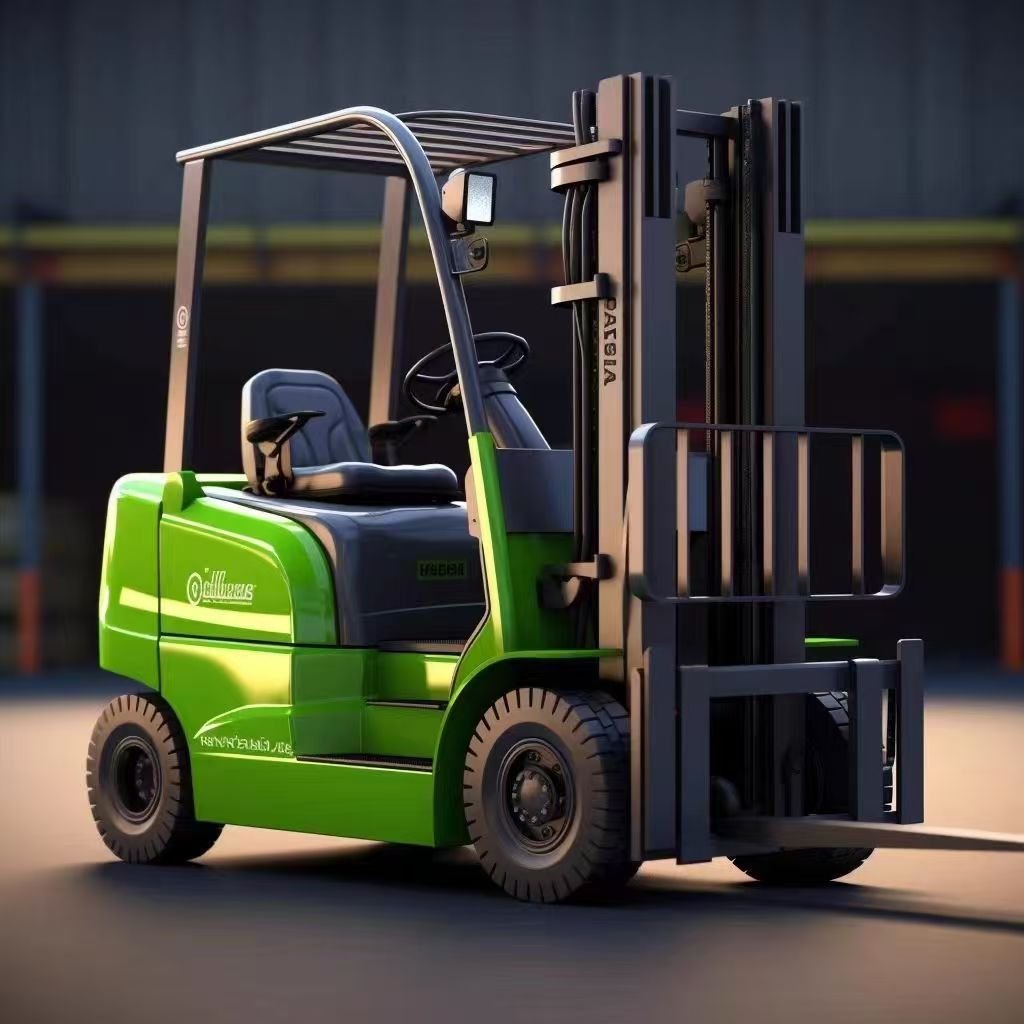
Cost Analysis of New Energy Electric Forklift Batteries: 5 Key Parameters for Procurement Decisions
In B2B procurement, the total cost of ownership (TCO) of new energy electric forklifts is the core decision-making factor, while battery costs account for as much as 40%-60%. Many buyers only focus on the vehicle price when inquiring about prices, while ignoring the impact of battery type, capacity, lifespan, and replacement costs on long-term operation. This article will focus on new energy electric forklift battery cost This key search intent unfolds from five parameters: the comparison of lithium batteries and lead-acid batteries, capacity selection, cycle life, charging facilities, and residual value, to help you budget accurately and avoid hidden cost traps. To learn more about the vehicle's configuration, please visit New Energy Electric Forklift Product Page Get detailed technical specifications.
1. Battery Types: Cost Differences Between Lithium Batteries and Lead-Acid Batteries
Currently, mainstream new energy electric forklifts use lithium iron phosphate batteries or lead-acid batteries. Lead-acid batteries have a low initial procurement cost, approximately 15,000-25,000 yuan per set (48V/600Ah), but their cycle life is only 1200-1500 times and they require regular water addition and maintenance. The initial cost of lithium batteries is about 35,000-50,000 yuan per set, but they have a cycle life of 3,000-5,000 times and support opportunistic charging. Based on an 8-hour workday and 300 days a year, lead-acid batteries need to be replaced every 2-3 years, while lithium batteries can be used stably for 5-8 years. Converted to cost per ampere-hour, lithium batteries are actually 15%-25% lower.
2. Capacity Selection: How to Match Operating Conditions with Budget
Battery capacity (Ah) directly affects range and price. When purchasing, calculations must be made based on the forklift tonnage and operational intensity:
- Light working conditions (less than 2 tons, 4 hours per day) We recommend 48V/400Ah, with a lithium battery cost of approximately 28,000 yuan and a lead-acid battery cost of approximately 12,000 yuan.
- Medium operating conditions (2-3 tons, 8 hours per day) We recommend 80V/500Ah, with lithium batteries costing approximately 45,000 yuan and lead-acid batteries costing approximately 20,000 yuan.
- Heavy working conditions (over 3 tons, two shifts) We recommend 80V/700Ah or higher, and consider a dual-pack battery swapping solution. The cost of lithium batteries is approximately 60,000-80,000 yuan.
Too small a capacity can lead to frequent charging and shorten battery life; Excessive capacity increases the initial investment. Recommended use Forklift selection tool Alternatively, consult the manufacturer for operating condition simulations.
3. Cycle Life and Replacement Cost: Core Variables of TCO
Battery cycle life is key to determining long-term costs. Lead-acid batteries cycle approximately 1200 times under deep discharge (80% DOD). If charged and discharged once a day, they need to be replaced every 3.3 years. Lithium batteries cycle 3,500 times at the same depth, which takes about 9.6 years. Based on a 5-year service life, lead-acid batteries need to be replaced 1-2 times, with a total cost (initial + replacement) of approximately 45,000-75,000 yuan. Lithium batteries only require an initial investment of 45,000 yuan and have a higher residual value. In addition, lithium batteries have an efficiency of over 95% and lead-acid batteries are only 80%, which means that lithium batteries have more actual usable energy under the same capacity, further reducing the cost per kilowatt-hour.
4. Charging facilities and operating costs
Charging methods affect battery life and electricity costs. Lead-acid batteries require a dedicated charging room equipped with ventilation and acid-proof facilities, and can be charged for 8 hours and cooled for 8 hours; they cannot be charged and used at any time. The lithium battery supports opportunity charging and can be recharged during rest time, eliminating the need for a spare battery and saving labor for battery swapping. Based on one charge per day, the charging loss of lead-acid batteries is about 20%, while that of lithium batteries is only 5%. At an industrial electricity price of 0.8 yuan/kWh, a 3-ton forklift consumes about 15,000 kilowatt-hours of electricity per year, and lithium batteries can save about 1,800 yuan in electricity costs per year. If you purchase multiple forklifts, it is recommended to install smart charging piles to further reduce peak electricity costs.
5. Residual value and recovery: neglected cost items
After lead-acid batteries are scrapped, their recycling value is approximately 200-300 yuan per set, but environmental protection fees must be paid. The lithium battery recycling market is still immature, but cascade utilization (such as energy storage) can recover 30%-40% of the cost. Some manufacturers offer battery leasing or trade-in services, for example New energy electric forklift In procurement, choosing the leasing model can reduce the initial investment by 50%, but it is necessary to assess the balance between long-term rent and purchase cost. It is recommended to specify battery degradation standards in the contract (such as free replacement if the capacity is below 80%) to lock in risks.
Summary: Procurement Decision Checklist
When assessing the cost of new energy electric forklift batteries, be sure to calculate the 5-year TCO, rather than just looking at the initial quote. Prioritize lithium batteries with long cycle life and support opportunistic charging, and match the capacity according to operating conditions. At the same time, pay attention to the compatibility of charging facilities and residual value recovery clauses. If you also need equipment such as concrete pumps or precision folding slide saws, you can browse... full range of products Obtain a packaged procurement plan.