In the woodworking and construction machinery industry, purchasing decisions often focus on equipment performance and ROI, but one often overlooked detail-the comfort and safety of operators-directly affects production efficiency and finished product quality. As industry experts say, if toolmakers can realize a wish, many people will choose "high-heeled work boots"-a seemingly joking appeal that actually reveals the core position of ergonomics in heavy industry. This paper will combine the selection logic of woodworking machinery and engineering machinery, and explore how to realize the comprehensive optimization from "sole" to "production line" through equipment upgrading and humanized design.
Ergonomics: An underrated productivity lever
Long-term standing operation is the norm in woodworking workshops and engineering sites. According to the American Institute of Occupational Safety and Health, improving the operator standing support system can reduce musculoskeletal fatigue by 30%, thereby improving continuous operating efficiency by 15%. When selecting equipment, paying attention to the height adjustment range of the operating table, the design of anti-slip pedals, the configuration of shock-absorbing floor mats and other details are as important as purchasing high-precision spindles or hydraulic systems. For example, if the heavy-duty edge banding machine is equipped with an adjustable foot platform, workers can more stably control the feeding rhythm and reduce board waste.
Core Technical Parameters: The Key to Determining the Machining Cap
For woodworking machinery, spindle speed (common 18000-24000 RPM), motor power (7.5-15 kW), cutting accuracy (±0.1 mm) are the core indicators. Construction machinery needs to evaluate the hydraulic system pressure (e.g. 200 bar), bucket volume (0.5-3 m³) and swing torque. It is recommended that buyers establish a "demand matrix": compare the workpiece materials (hardwood/softwood) and batch size with the existing process, and choose equipment with a redundancy of about 20%-not only avoid over-investment, but also leave room for product upgrades.
Application Scenario Customization: The Game between General Equipment and Special Scheme
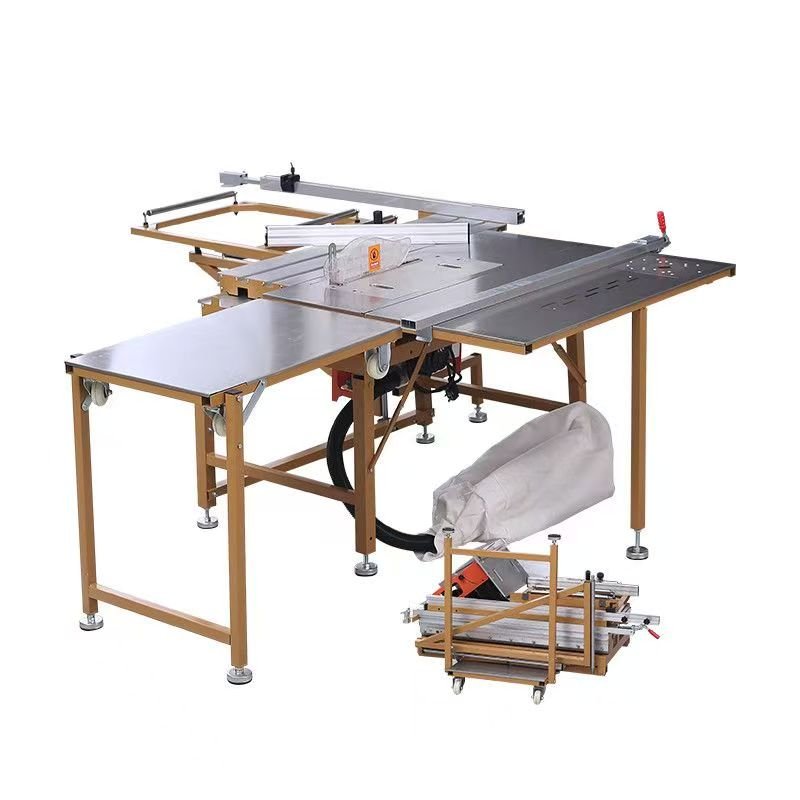
Taking the panel furniture production line as an example, the universal push table saw is suitable for small batch customization, while the automated numerical control machining center (CNC) can achieve high consistency in large batches. For construction machinery, earthmoving work focuses on the wear resistance of bucket teeth, while material handling needs to strengthen the sealing performance of lifting hydraulic cylinder. My suggestion is: if the order structure is stable, give priority to special equipment; If the market fluctuates greatly, general models with modular design can be considered. For example, JIYU series multifunctional woodworking planer By replacing the workbench accessories, both planing and milling can be taken into account, and the equipment utilization rate can be significantly improved.
Selection Evaluation Framework: From TCO to Aftermarket Network
Total cost of ownership (TCO) should cover initial procurement, energy consumption (e.g. servomotors save 30% more energy than asynchronous motors), maintenance (tool change cycle) and residual value. At the same time, inspect the supplier's localized service capability: the response time is no more than 24 hours, and the inventory rate of common spare parts is ≥95%. In addition, the duration of operational training and digital support (such as remote diagnosis) are also important plus points. It is recommended to visit at least two similar factories on the spot and record the actual operating noise, vibration and chip removal effect of the equipment.
Industry Trends: Intelligent and Green Manufacturing
Driven by Industry 4.0, woodworking machinery is integrating IoT sensors to monitor tool wear and energy consumption in real time, and predictive maintenance can reduce unplanned downtime by 45%. Construction machinery accelerates the electrification transformation, for example, the operating cost of electric excavators is more than 60% lower than that of diesel models. In the procurement planning, reserving data interfaces (such as OPC UA protocol) and upgrade expansion space can avoid the risk of technology obsolescence in the next 3-5 years. Pay attention to industry exhibitions and Technical Trends It can help enterprises capture cutting-edge application cases.
sum up
Whether it is choosing a pair of comfortable work boots for workers or purchasing a million-level production line for factories, the core logic is "people-oriented and data-driven". Excellent equipment procurement should pay attention to operator experience, technical parameters and long-term service at the same time. It is recommended that enterprises establish cross-departmental evaluation teams, incorporate the opinions of production, maintenance and safety personnel into decision-making, and use sample trial processing to verify the equipment performance. Through systematic upgrades, woodworking and engineering enterprises can steadily move forward on the dual track of efficiency and quality.