Why did small excavators become popular at the 140th Canton Fair?
The 140th Canton Fair is approaching, and the construction machinery exhibition area has once again become the focus of attention of B2B buyers. According to the official exhibitor directory, RIPPA and other brands will present their small excavator products. This trend is no accident-in the past three years, the global small excavator market has grown at an average annual rate of 6.8%, with the Asia-Pacific and European regions contributing the main increase. For purchasers engaged in municipal engineering, agricultural renovation or leasing businesses, small excavators are being upgraded from "auxiliary equipment" to "core productivity tools."
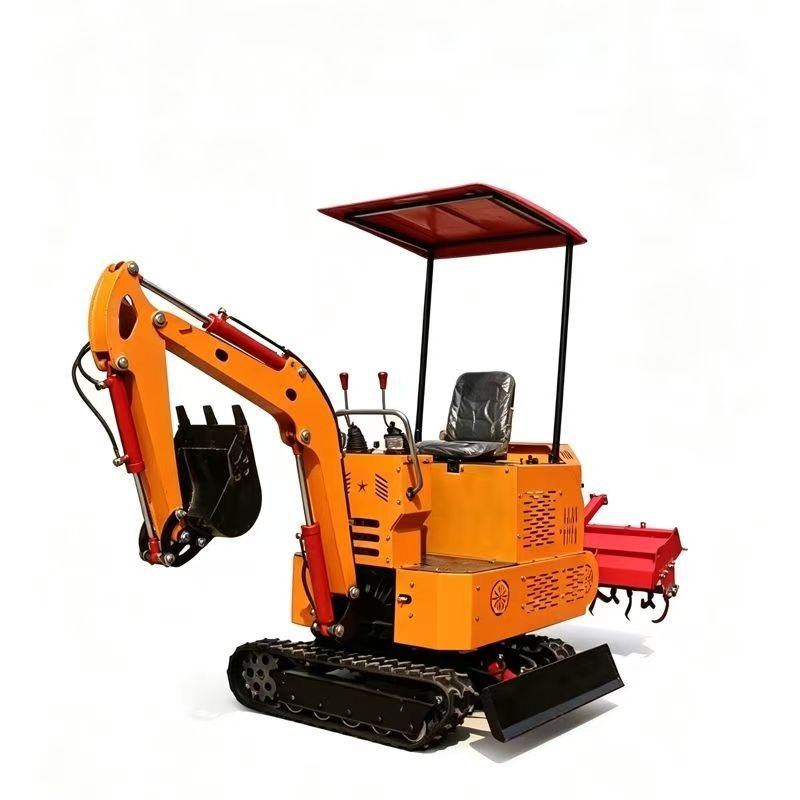
Unlike large excavators, the core value of small excavators (usually referred to as 1-6 tons) isScenario adaptability。They can operate in space-limited conditions such as narrow roadways, indoor demolitions, and orchard ditching, while the transportation cost is only 1/5 of that of large equipment. If you are planning an equipment purchase list for the next quarter, you may wish to go through it first.product CenterUnderstand the technical parameters of current mainstream models.
Technical disassembly: Three core performance indicators of small excavators
Procurement decisions cannot be based solely on price. The following three technical dimensions directly determine the full life cycle return rate of the device:
- Hydraulic system efficiency:The matching degree of variable displacement pump and load sensitive valve affects the smoothness of compound action. Taking the 1.8-ton model as an example, the high-quality hydraulic system can shorten the single excavation cycle time to less than 12 seconds, improving the operating efficiency by about 18% compared with ordinary systems.
- Engine power and emission standards:EU Stage V and U.S. EPA Tier 4 Final are entry barriers for exporting to European and American markets. When purchasing, it is necessary to confirm whether the engine is equipped with DPF (Diesel Particulate Trap) and SCR (Selective Catalytic Reduction) systems to avoid subsequent restrictions on entry due to non-compliance with emissions.
- Chassis expansion capacity:Variable track chassis has become standard on high-end small excavators. It takes only 15 seconds for the track to retract from 980mm to 780mm, which means that the same device can pass through standard door openings and remain stable in open areas.
It is worth noting that some manufacturers have begun to use IoT modules as options. byindustry informationAs can be seen from the case of the sector, after installing GPS and remote diagnosis modules, the leasing company's equipment scheduling efficiency has increased by an average of 23%, and unplanned downtime has been reduced by 31%.
Application scenarios: Cross-border capabilities from municipal greening to indoor demolition
The purchasing group of small excavators is spreading. In the past, it was mainly engineering contractors, but now agricultural cooperatives, property management companies and even facility maintenance departments of large factories have become active buyers. Here are three high-growth scenarios:
- Urban micro update:Projects such as pipeline renovation in old communities and pocket park construction often face the dilemma of large equipment being unable to enter the site. A small excavator with a quick-change device can complete the switching of crushing hammers, hydraulic shears and buckets in one hour, completing 3-4 working faces in a single day.
- Facility agriculture:Drainage ditch excavation and seedbed finishing in greenhouses require equipment with low noise and zero exhaust emission characteristics. The penetration rate of electric small excavators in this scenario has increased from 4% in 2020 to 17% in 2024.
- Interior Demolition:In commercial complex renovations, remotely-operated small excavators can avoid operator exposure to dust and the risk of structural collapse. Some models have a remote control distance of up to 150 meters and support multi-machine collaborative work.
If you are not sure which model is suitable for your business, we recommend referring toproduct pageor directly contact the supplier to provide customized selection reports.
Selection suggestions: Five details that must be verified for B2B procurement
When viewing the plane at the Canton Fair site, it is recommended to bring the following checklist:
- Structural steel label:The boom and stick should be made of Q355B or higher strength steel, avoiding Q235 ordinary carbon steel. The latter is prone to fatigue cracks under long-term high-frequency operation.
- Swing motor brand:Preference is given to models using brands such as Rexroth, Kawasaki or Nabotsk. The life of the swing motor directly determines the residual value of the equipment.
- Cooling system redundancy:When operating continuously at an ambient temperature of 45℃ for 2 hours, the hydraulic oil temperature should not exceed 85℃. Suppliers may be required to provide third-party thermal balance test reports.
- Interface versatility:Confirm whether the quick-change device complies with ISO 24410 standards, which is related to the subsequent purchase of third-party accessories at low cost.
- After-sales parts supply radius:Suppliers are required to make a written commitment that commonly used parts (filter elements, bucket teeth, oil seals) can reach the project site within 48 hours. For transnational procurement, the spare parts list of overseas warehouses needs to be clarified.
Summary: A long-term perspective on small excavators procurement
The 140th Canton Fair is not only a display window for new products, but also a touchstone for testing suppliers 'comprehensive capabilities. For B2B buyers, the decision-making logic for small excavators should shift from "single price" to "operating cost per ton". A device that sells for a price of 15% more but has a 20% increase in hydraulic system efficiency and a 10 percentage point higher residual value rate can create significant excess returns over a three-year cycle. It is recommended that the procurement team focus on inspecting the equipment's maintainability design, ecological richness and supplier's digital service capabilities at the exhibition site-these factors will determine whether the equipment can continue to create value in the next five years.