In the field of woodworking machinery and engineering machinery, the installation of cabinet drawers seems to be a basic process, but its accuracy and efficiency directly affect the quality and production efficiency of the final product. Whether it's a custom furniture workshop or a large-scale industrial production line, mastering the core technology of drawer installation — especially the assembly of hidden slides — is key to increasing your competitiveness. This article will delve into the process essentials of drawer installation, common challenges, and how to optimize this process with modern equipment.
The technical core of drawer installation: precise assembly of hidden slides
Undermount Slides dominate modern cabinet design due to their aesthetics and load-bearing properties. Unlike traditional side-mounted slides, hidden slides are mounted at the bottom of the drawer, which are not only visually cleaner but also showcase exquisite dovetail craftsmanship. However, its installation accuracy is extremely high: if the angle deviation of the slide rail from the side panel of the drawer exceeds 0.5 mm, it may lead to poor running or loose closure of the drawer.
The professional installation process usually consists of three steps: first, precisely mark the position of the slide rail on the side panel of the drawer to ensure left-right symmetry; Secondly, use special fixtures or CNC machining centers to pre-drill holes to avoid errors caused by manual drilling; Finally, the slide rail is fixed to the side plate of the cabinet body, and the height and level of the drawer are finely adjusted. For batch production, the adoption of CNC drilling machines and automatic feeding systems can significantly improve consistency and reduce installation time by more than 40%.
Frequently Asked Problems and Solutions in Drawer Installation
In actual production, the main problems faced by drawer installation include: slide rail loosening, drawer drooping, and running noise. These problems often stem from material deformation or improper installation processes. For example, solid wood drawers tend to expand under changes in humidity, causing the slide rails to stick; However, inferior screws or too small pre-drilled holes may cause the slide rail to loosen.
In view of these problems, it is recommended to take the following measures: choose high-strength alloy slide rail and cooperate with anti-loosening screws; Adding reinforcing ribs at the bottom of the drawer to improve the structural rigidity; At the same time, the laser rangefinder or 3D scanner are used for quality inspection to ensure the installation accuracy of each batch of products. For high-output production lines, automatic screw locking machine and visual inspection system are integrated, which can realize unmanned operation in the whole process and control the defect rate within 0.5%.
Manual vs. Automation: How to Choose the Right Installation Scheme?
For small-batch custom or high-end woodworkshops, manual installation still has an advantage – it allows technicians to make flexible adjustments to the properties of the wood, and is especially suitable for complex shaped drawers. However, manual labor relies on experience and is less efficient. It takes 15-20 minutes for a skilled worker to install a pair of drawers.
On the contrary, medium and large enterprises prefer automated solutions. For example, using a six-axis industrial robot with an end effector, a complete set of actions such as slide rail positioning, drilling, and locking screws can be completed, and the beat time can be shortened to less than 3 minutes. In addition, the modular fixture design enables quick switching between different specifications to meet diverse needs. The ROI analysis shows that if the monthly output exceeds 5,000 drawers, automation equipment usually pays for itself within 18 months.
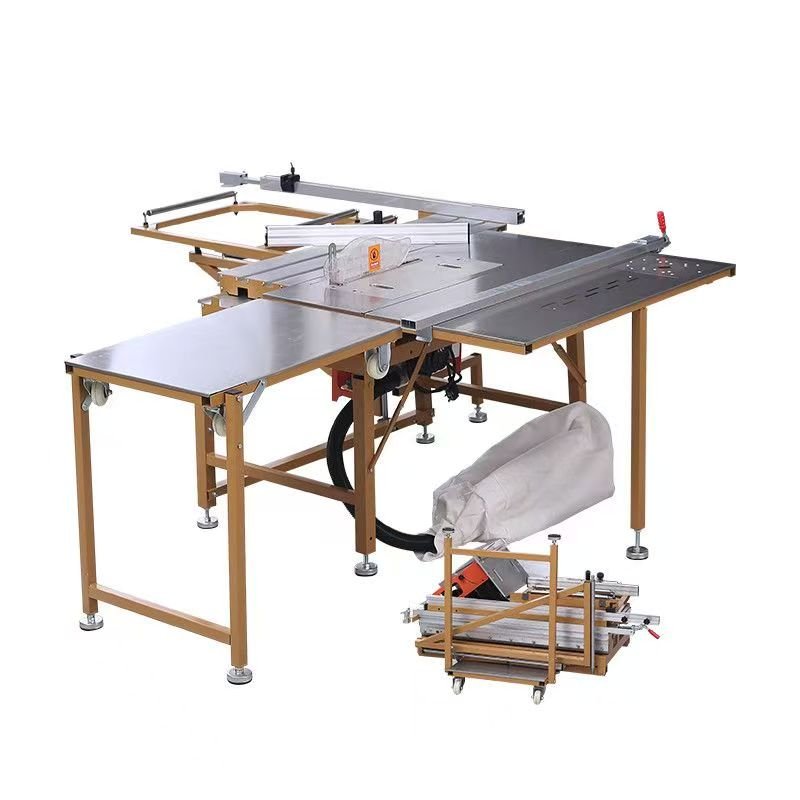
It is important to note that upfront planning is crucial regardless of the option chosen. Suggested Reference Our product catalogue Learn about all kinds of woodworking machinery suitable for drawer installation, including precision panel saws, edge banding machines and CNC machining centers, which can effectively improve the accuracy of the previous process and lay the foundation for subsequent installation.
From drawer installation to whole line optimization: improving overall production efficiency
Drawer installation is not an isolated process, it is closely connected with cabinet production and hardware assembly. An efficient production process should consider plate cutting, edge sealing, drilling, assembly and other links. For example, the use of CNC panel saws can ensure the dimensional consistency of drawer side panels, and the real-time monitoring of each station data through the MES system can quickly identify bottlenecks.
In the field of construction machinery, similar principles apply equally. For example, the installation of drawers or storage bins in the cab of an excavator also needs to take into account both accuracy and durability. The use of an automated assembly line with torque control tools ensures that the tightening force of each bolt meets the standard and avoids loosening due to vibration. In addition, regular maintenance of equipment (e.g. rail lubrication, tool change) can extend machine life and reduce downtime. For more industry updates, please visit Our News Center Get the latest technology trends and case sharing.
sum up
Although the cabinet drawer installation is small, it reflects the precision manufacturing concept of the woodworking machinery industry. From manual measurement to digital control, from single equipment to complete line automation, every step of the evolution aims to improve efficiency and quality. For purchasers, choosing suitable equipment and process requires comprehensive consideration of output, accuracy requirements and investment budget. If you are interested in purchasing relevant equipment, please visit Product Page Our team of experts will provide you with customized solutions.