Recently, the American Equipment Distributors Association (AED) sent a letter to US President Trump and Canadian Prime Minister Carney, calling on the two countries to establish a fair, predictable and mutually beneficial trade relationship to support the development of the heavy equipment industry in North America. This incident not only reflects the high concern of the North American market for trade policy, but also provides an important signal for China's woodworking machinery and construction machinery export enterprises: under the background of complex and changeable global trade environment, understanding regional market dynamics, optimizing export strategies and improving product compliance are the keys to winning the international market.
The Trends of Trade Policy in North American Market and Its Influence on Equipment Industry
North America is an important consumer market of construction machinery and woodworking machinery in the world, and the adjustment of its trade policy directly affects the import and export pattern of equipment. In the letter, AED noted that the current trade uncertainty has caused disruption to equipment distributors' inventory planning, cost control, and customer investment decisions. For example, the United States imposed tariffs on some imported equipment, which led to higher procurement costs for distributors and forced some projects to be delayed. At the same time, as an important link in North American supply chain, Canada's policy coordination is crucial for cross-border logistics and after-sales service. For Chinese exporters, this means that North American customers may be more inclined to purchase cost-effective equipment with stable delivery to hedge trade risks.
Opportunities and Challenges of China's Woodworking Machinery and Construction Machinery Export
China is one of the world's largest producers of woodworking machinery and construction machinery, with products covering sawing, edge sealing, drilling, concrete mixing, lifting and other categories. In the North American market, Chinese equipment has occupied a certain share by virtue of its price advantage and fast delivery ability. However, trade barriers and compliance requirements (e.g. UL certification, CE certification) remain major challenges. In addition, North American customers have increasing requirements for intelligent equipment, remote maintenance, energy conservation and emission reduction, forcing Chinese enterprises to increase R&D investment. For example, in the field of woodworking machinery, the demand for high-end equipment such as CNC cutting machines and automatic edge banding machines is increasing, while the field of construction machinery pays more attention to the stability and emission standards of hydraulic systems.
Countermeasures of Export Enterprises: Comprehensive Upgrading from Products to Services
In the face of policy fluctuations in the North American market, Chinese exporters can adopt the following strategies:
- Market Diversification: While consolidating traditional markets such as Southeast Asia and Africa, we will actively explore emerging markets such as the Middle East and Latin America to reduce our dependence on the single market.
- Localization Services: Set up spare parts warehouses or service centers in North America to shorten response times and increase customer trust. For example, cooperative repair sites can be set up in the United States or Canada to provide remote diagnosis and training services.
- Compliance first: Understand the certification requirements of the target market in advance, such as American ANSI standard, Canadian CSA certification, to ensure that the product meets safety and environmental regulations.
- Technical upgrade: Introduce Internet of Things technology to realize remote monitoring and predictive maintenance of equipment, and meet customers' demand for intelligence. For example, integrate sensors in woodworking machinery to give real-time feedback on machining accuracy.
In addition, enterprises should pay attention to international trade dynamics, such as the revision of NAFTA, the list of tariff exemptions, etc., and adjust their export plans in time. Please refer to more industry information News centres , Get the latest market analysis.
Selection Recommendations: How to Recommend the Right Equipment for Customers in North America
For the North American market, Chinese export enterprises should pay attention to the following aspects in product selection:
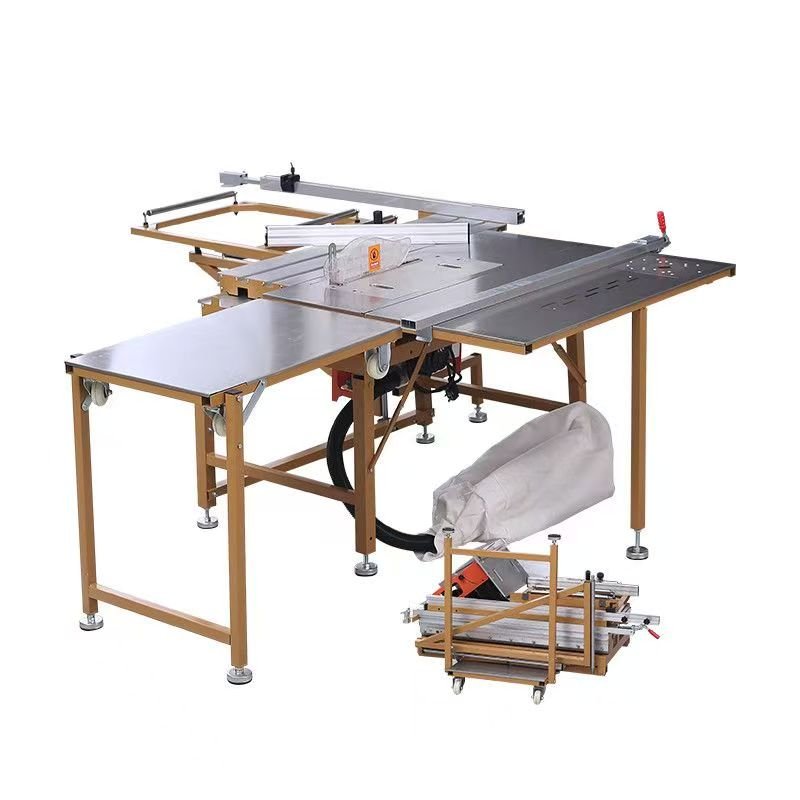
- Woodworking Machinery: CNC panel saws, automatic edge banding machines, five-sided drill machining centers, etc are recommended, which are widely used in the North American custom furniture and cabinet market. Ensure that the voltage level (110V/60Hz) and control system are compatible with North American standards.
- Construction machinery: Small excavators, skid steer loaders, concrete pump trucks, etc. are recommended, which are suitable for municipal construction and landscaping. Meet U.S. EPA emission standards (e.g. Tier 4) and be equipped with ROPS/FOPS safety protection.
When quoting, it should clearly include shipping, insurance, customs duties and other costs, and provide flexible payment methods (such as letter of credit, installment payment) to reduce customer purchasing risks. At the same time, customized configurations, such as hydraulic quick connectors and automatic lubrication systems, can be provided to meet differentiated needs.
sum up
The adjustment of trade policy in North America brings both challenges and opportunities. China's woodworking machinery and construction machinery enterprises should maintain their strategic focus and enhance their international competitiveness through technological upgrading, market diversification and localized services. At the same time, paying close attention to industry trends, such as the suggestions of AED and other associations, can help predict market trends. For specific product models and export schemes, please visit Product Center We will provide professional support.