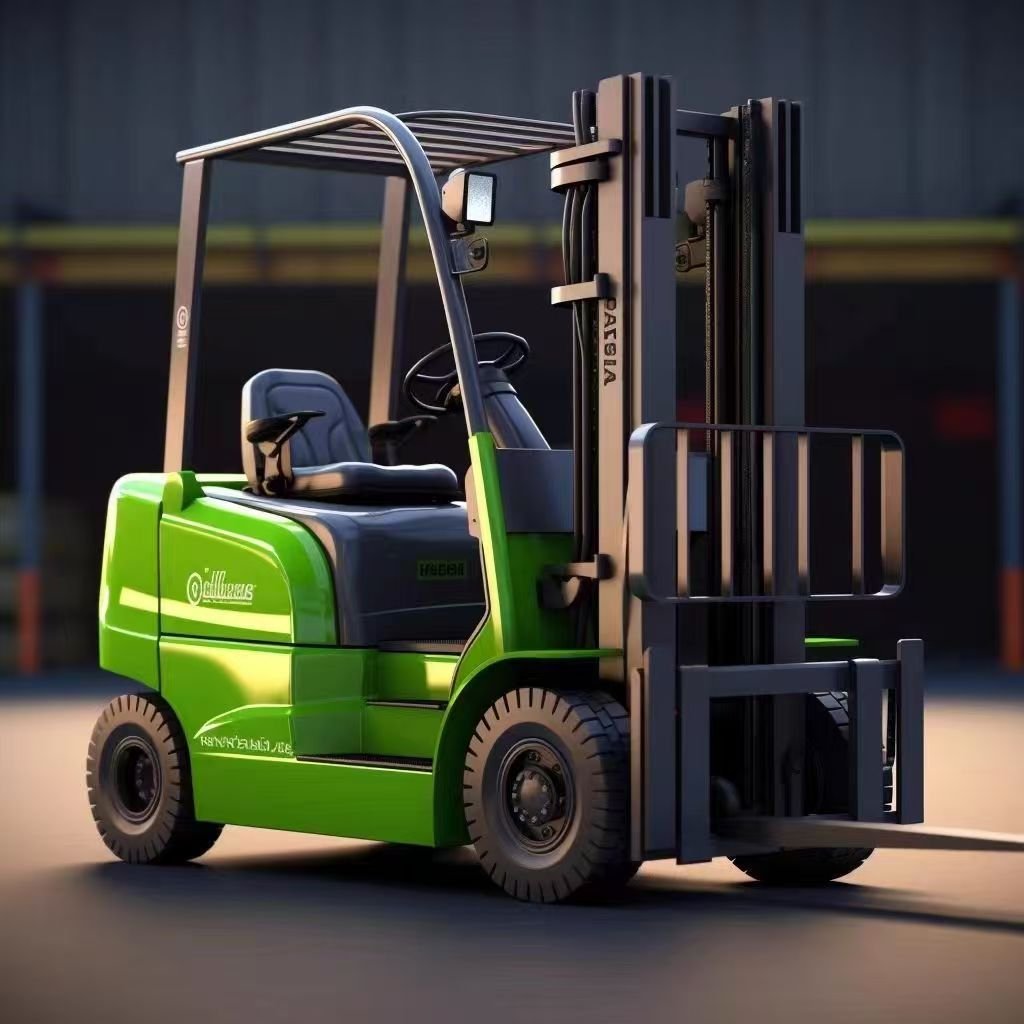
Why is the repair of new energy electric forklifts a key part of procurement decisions?
In B2B procurement, the total cost of ownership (TCO) of new energy electric forklifts not only includes the purchase price, but also covers maintenance and repair costs throughout the entire life cycle. Many buyers only focus on battery capacity and load parameters when selecting models, while neglecting ease of maintenance, spare parts supply, and after-sales service network, leading to a surge in later operating costs. This article will focus on new energy electric forklift repair This core search intent provides buyers with a practical repair and maintenance guide from four dimensions: technical parameters, selection points, application scenarios, and cost control, helping you avoid hidden costs in your procurement decisions.
I. Core Technical Parameters for New Energy Electric Forklift Maintenance
New energy electric forklifts (usually referring to lithium battery or hydrogen fuel cell forklifts) differ significantly from traditional lead-acid battery forklifts in terms of maintenance. Buyers should pay close attention to the following parameters:
- Battery System Types and Warranty Policies: Lithium batteries typically have a cycle life of 2,000-3,000 cycles. When purchasing, the battery warranty period (common in the industry is 5 years or 8,000 hours) and repair response time should be clearly defined. For hydrogen fuel cell forklifts, attention needs to be paid to stack lifespan (approximately 10,000 hours) and hydrogen refueling network coverage.
- Protection level of motor and electrical control system: Electric forklift motors and controllers should meet at least IP54 protection rating to adapt to dusty and humid industrial environments and reduce failure rates.
- Diagnostic interface and remote monitoring: Modern new energy forklifts are generally equipped with CAN bus diagnostic interfaces and Telematics systems. When purchasing, it should be confirmed whether they support fault code reading and remote diagnosis, as this directly affects maintenance efficiency.
- Spare parts versatility: Different brands of forklifts have significant differences in the versatility of key spare parts such as battery modules, motors, and controllers. Models with high versatility can reduce spare parts inventory costs and downtime.
It is recommended that buyers specify the repair response time (e.g., arrival within 24 hours) and spare parts supply cycle (e.g., shipment within 48 hours) for critical components in the contract, and link these clauses to the supplier's after-sales service rating.
II. Key points for selection: How to assess the maintainability of new energy electric forklifts?
Maintainability is an indicator that is easily overlooked when purchasing new energy electric forklifts. The following five points can help you evaluate:
- Modular design: Do the battery pack, motor, and controller adopt a modular design to support quick disassembly and assembly? Modular design can reduce maintenance time by more than 30%.
- Repair space and accessibility: Check the size and location of the access ports for the motor compartment and battery compartment to ensure that maintenance personnel can access the core components without having to disassemble a large number of peripheral components.
- Fault self-diagnosis capability: Vehicles should be equipped with fault code display and Bluetooth/Wi-Fi diagnostic functions to facilitate rapid on-site problem location.
- Supplier Service Network: Confirm the number of service outlets, technical personnel qualifications, and spare parts warehouse distribution of the supplier in your area. For cross-border procurement, time zone support and remote technical support capabilities also need to be considered.
- Training and Documentation: Does the supplier provide detailed maintenance manuals, circuit diagrams, and operational training? Complete documentation reduces reliance on original services.
For information on the specific configuration and maintenance design of the new energy electric forklifts on this website, please visit Product Center View the technical parameter table.
III. Differences in Application Scenarios and Maintenance Strategies
Different application scenarios have a significant impact on the maintenance strategy of new energy electric forklifts:
- Cold chain warehousing: Low-temperature environments accelerate battery capacity degradation, so low-temperature lithium batteries should be selected and the battery testing cycle should be shortened (once a quarter is recommended). During maintenance, attention should be paid to the corrosion of electrical components by condensate.
- Heavy-duty operating conditions (such as ports and steel): High-load operation causes the motor and controller to overheat severely. The maintenance of the heat dissipation system should be strengthened, and the contactors and wiring harnesses should be checked regularly for aging.
- Multi-shift operation: For scenarios where daily operation exceeds 16 hours, it is recommended to adopt an opportunistic charging strategy and configure a backup battery pack, while reducing preventive maintenance intervals to 500 hours.
- Food and pharmaceutical industry: Hygiene requirements are high, so models with stainless steel casings and waterproof motors must be selected. Food-grade lubricants must be used during maintenance.
Buyers should select the appropriate vehicle model configuration based on their own scenario and stipulate a targeted preventive maintenance plan (PMP) in the contract.
IV. Maintenance Cost Reference and Budget Control
The maintenance cost structure of new energy electric forklifts is different from that of traditional forklifts. The following is industry reference data (taking a 3-ton lithium battery forklift as an example, with an annual operating time of 2,000 hours):
- Preventive Maintenance: Approximately $800-1500 per year, including inspection, cleaning, lubrication, and software upgrades.
- Consumable parts replacement: Tires, brake pads, hydraulic fluid, etc., cost about $500-1,000 per year.
- Battery Repair/Replacement: Lithium batteries have a low probability of being repaired during the warranty period (5 years), but the replacement cost after the warranty period is exceeded is about $3,000-5,000. Hydrogen fuel cell stacks have higher maintenance costs and require advance planning.
- Motor and Controller Repair: The failure rate is low, but once damaged, the repair or replacement cost is about $1,000-3,000.
- Downtime losses: This is the biggest hidden cost. Based on a downtime loss of $50 per hour, a 24-hour downtime would cost $1,200. Therefore, choosing a supplier with a fast repair response is crucial.
It is recommended that buyers set aside 5%-8% of the purchase price in their budget as an annual maintenance fund, and prioritize suppliers that offer extended warranties and preventive maintenance packages. For more cost optimization strategies, please refer to Industry News Case analysis in [the text].
sum up
The repair and maintenance of new energy electric forklifts is an indispensable part of B2B procurement. By paying attention to battery system parameters, evaluating maintainability design, matching application scenario needs, and rationally planning maintenance budgets, buyers can effectively control total cost of ownership and improve operational efficiency. In procurement negotiations, it is essential to include maintenance response time, spare parts supply, and training support in the contract terms to lay the foundation for long-term stable operation.