Solid wood furniture custom workshop equipment selection guide: from opening to handling, one-stop procurement advice
Pain Points in Equipment Selection for Custom Solid Wood Furniture Workshops
Custom solid-wood furniture workshops typically face challenges such as order diversification, varying board specifications, limited space, and complex multi-process coordination. When procuring equipment, you need to strike a balance.Processing accuracy, production efficiency, equipment compatibility, operating costs, and space utilization.. Common pain points include:
- Insufficient cutting accuracySolid wood has high hardness and intricate grain patterns; ordinary sawing equipment often produces rough saw cuts and dimensional inaccuracies, making subsequent assembly difficult.
- Poor device mobilityCustom orders often require on-site processing or frequent adjustments to the production line layout, and bulky equipment is difficult to move.
- Multiple-process equipment is dispersed.From raw lumber cutting to finished-product handling, if each process is procured separately, it not only results in high costs but also occupies a significant amount of workshop space.
- High reliance on human resourcesA shortage of skilled carpenters and the lengthy training required to operate complex equipment are impacting delivery timelines.
- Environmental protection and energy consumption pressuresDust, noise, and emissions from fuel-powered equipment in the workshop must comply with environmental protection requirements, while electricity and fuel costs should be controlled.
Key Considerations for Selecting a Custom Solid Wood Furniture Workshop (Checklist)
Based on the aforementioned pain points, please carefully verify the following points item by item when procuring equipment:
- Processing capacity matchingDoes the equipment’s maximum processing size (e.g., sheet material width, log diameter) cover the range of orders you typically handle? Does it support customization?
- Accuracy and stabilityDo the guide rails, saw blade, and clamping mechanism ensure repeatable positioning accuracy? For example, the linear guide rail error of a sliding table saw should be less than 0.5 mm.
- Mobility and spatial adaptabilityIs the equipment foldable, equipped with casters, or designed to be compact? Can it fit through elevators, standard doorways, or operate in narrow spaces?
- Ease of operationDoes it feature one-touch start-up with clear labeling? Can workers quickly get up to speed, thereby reducing training costs?
- Power and Environmental Protection: Prioritize all-electric or hybrid equipment to reduce indoor emissions; monitor energy consumption data (e.g., electricity costs of 1–2 cents per hour).
- Multifunctional integrationCan a single machine handle multiple processes (such as excavation, rotary tillage, cutting, and edging), thereby reducing the number of units purchased and the storage space required?
- Safety and MaintenanceIs it equipped with an emergency stop, a protective guard, and a dust extraction interface? Are the key components (motor, saw blade) durable and easy to replace?
- Supplier support:Do you offer model customization, technical training, and after-sales service?
Product Recommendations and Selection Rationale
For the core processes in a custom solid-wood furniture workshop, we recommend the following equipment combinations, all based on real product data:
1. Material Preparation and Cutting: Precision Folding Sliding Table Saw, Woodworking Band Saw, Multi-Function Circular Saw with Push Table
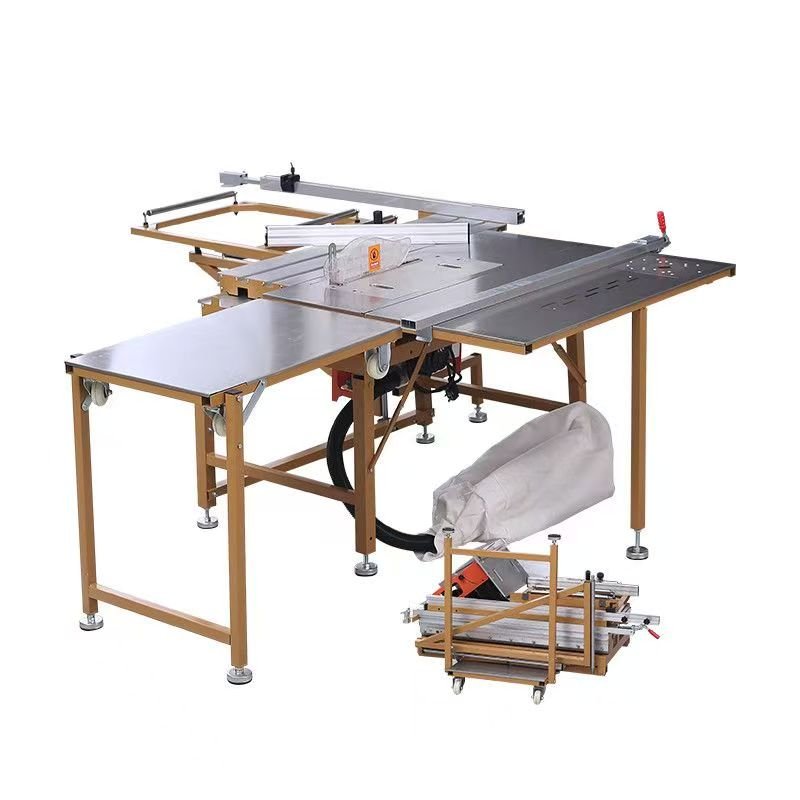
- Precision folding slide table sawPrecise cutting suitable for standard panels. The folding size is only 100*60*35cm, which can be put into the trunk of the car for on-site operation. After unfolding, the sliding Delta is 215*250*75cm, and one person can cut 122*244cm large plates, supporting 45-degree oblique cutting and 1-90-degree transverse cutting, with high precision and no burrs. Reason for selection: It addresses the pain points of limited space and frequent repositioning in the custom workshop, while single-person large-panel cutting helps reduce labor costs.
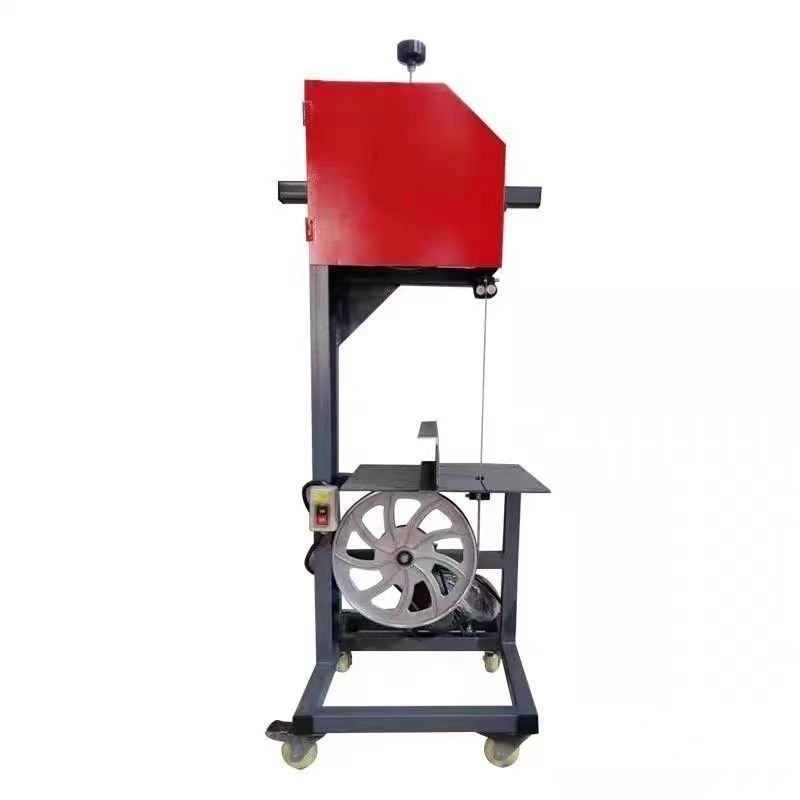
- Woodworking band sawSuitable for curved cutting of solid wood and machining of irregular shapes. Provide 6 models (jig saw/30/35/40/50/60), motor 2.2KW-7.5KW, bimetal/alloy blade, thickened cast iron wheel to ensure stability. Selection reasons: covering from precision curves to heavy hardwood tearing, one-button start, no foundation, suitable for furniture factory multi-species production.
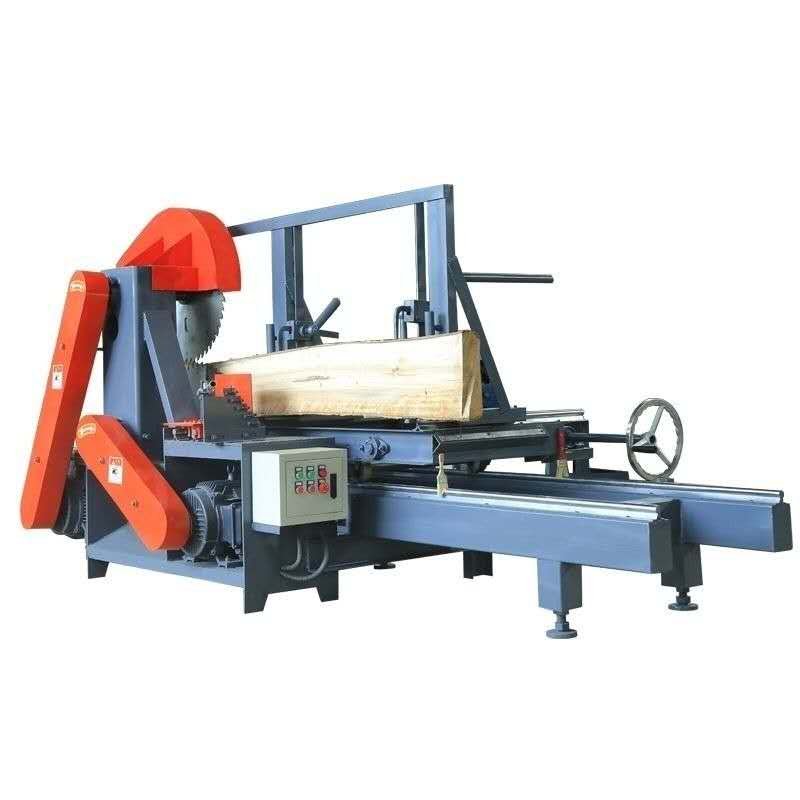
- Multi-functional circular log table sawSpecifically designed for log cutting, with a maximum processing diameter of 500mm and a customizable length ranging from 0.5 to 6 meters. Double saw blade push table structure, the saw surface is smooth without secondary planing, 2-3 cubic meters per hour, the efficiency is 3 times that of traditional band saw. Pneumatic clamping, single-operator operation, fully enclosed dust collection. Reason for selection: Enhances the efficiency of raw timber cutting, reduces waste, and is well-suited for custom workshops with raw timber processing needs.
2. Material Handling: New Energy Electric Forklift
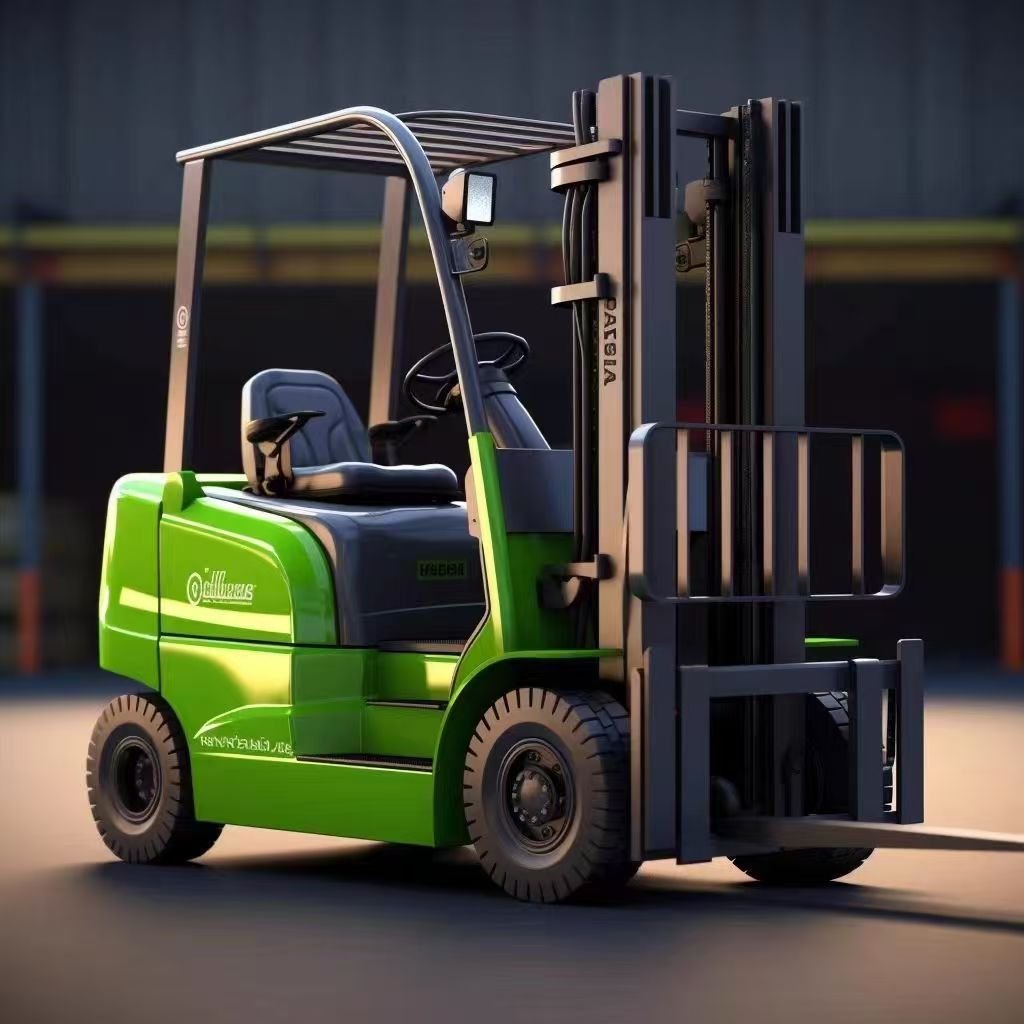
- New energy electric forkliftFour-wheel seated pure electric model, with optional load capacities of 1T/1.5T/2T/2.5T/3T. 60V all-electric system, zero emissions, low noise, with electricity costs of only 1–2 cents per hour. Hydraulic power steering, 90-degree turning radius, zero-turn steering, ideal for narrow workshop aisles. Reason for selection: Replaces fuel-powered forklifts, reducing indoor emissions and operational costs, with five load capacities to meet diverse material-handling needs.
3. Auxiliary and specialized equipment: mini excavator (integrated digging and rotary tillage machine), spider crane, concrete pump
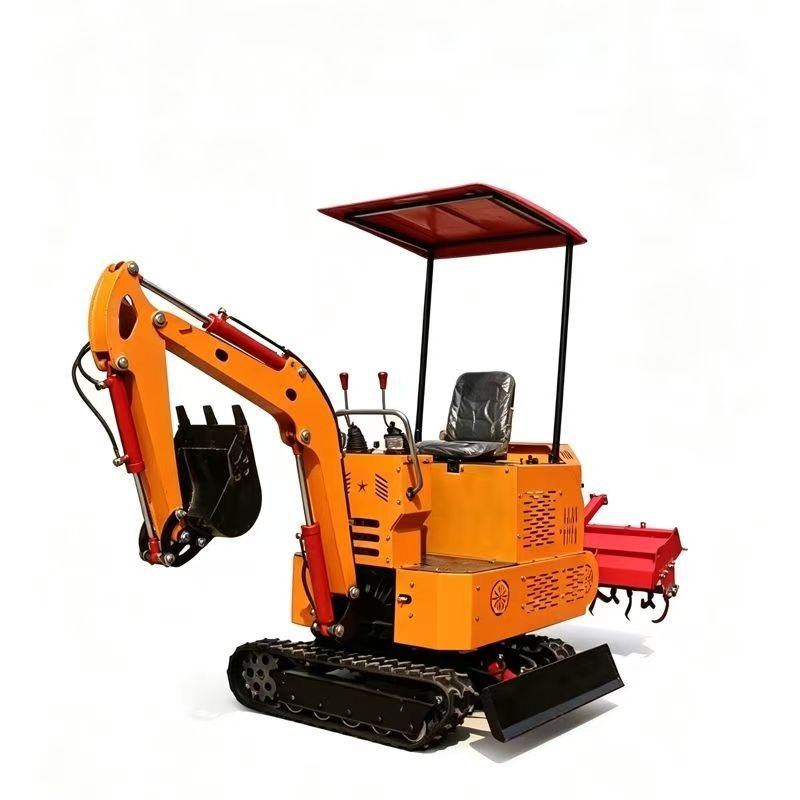
- Mini excavatorFront digging and rear tilling, 360-degree rotation, compact dimensions of 2000×1000×2300 mm, transportable by light-duty truck. Reason for selection: Suitable for small-scale earthwork, landscaping, or equipment foundation construction within workshops, offering multi-purpose functionality in a single machine.
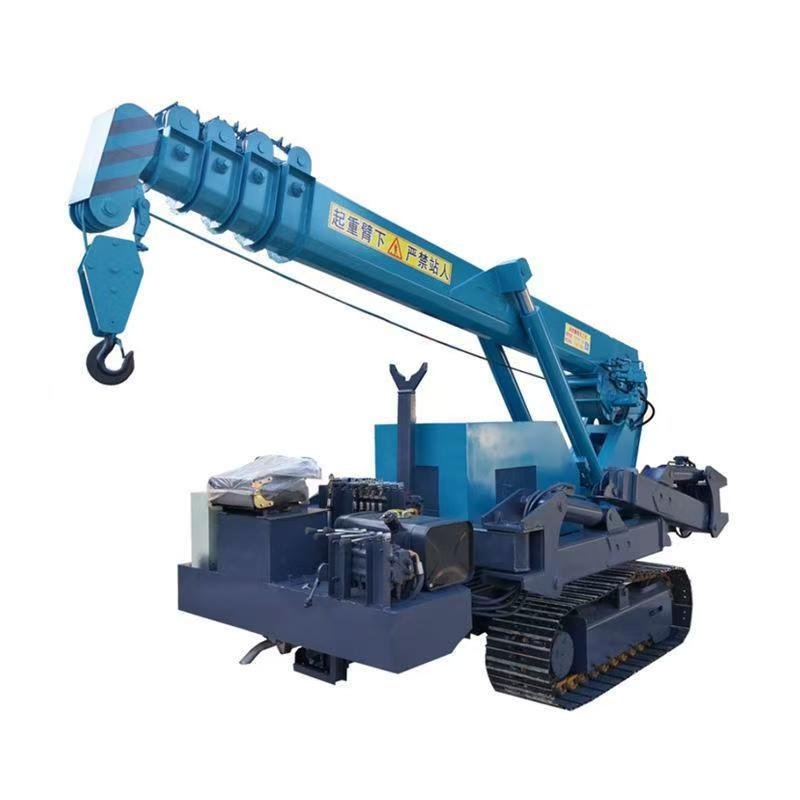
- Spider craneModels: 1T/3T/5T/8T, U-shaped telescopic boom, 360-degree continuous rotation, dual fuel-electric power. Designed specifically for confined spaces, it can pass through standard doorways and elevators. Reason for selection: It addresses the challenge of indoor lifting in areas where large cranes cannot access, such as equipment installation and log feeding.
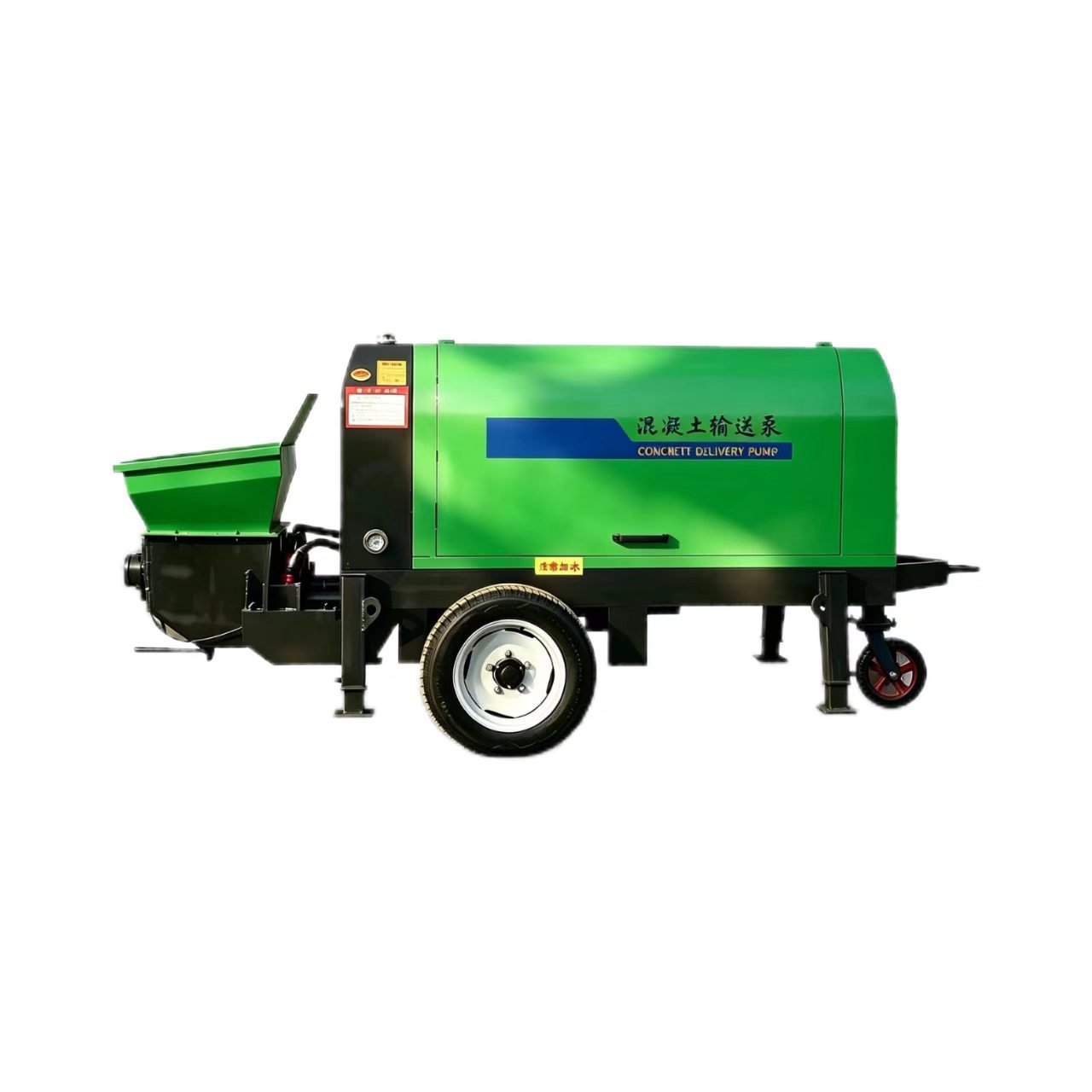
- Concrete pump truckElectric/diesel dual-power, output capacity 5–55 m³/h, maximum vertical lift 200 m. Reason for selection: If the workshop involves infrastructure or flooring construction, on-site concrete pumping can be conducted independently, thereby reducing rental costs.
The above equipment supports customization and can be flexibly matched according to the actual process and budget of the workshop. It is recommended to give priority to the procurement of cutting and handling equipment, and then gradually expand the special operation equipment.