Concrete pump vs spider crane: B2B purchasing selection comparison guide
| Dimension | Concrete Delivery Pump | Spider Crane (Mini Crawler Crane) | Analysis |
|---|---|---|---|
| Power type | 电动/柴油双动力 | 油电双动力 | Both provide dual power options, but the electric version of the concrete pump focuses on low operating costs, and the diesel version is suitable for off-web; the electric version of the spider crane focuses on zero emission and low noise, and the diesel version is suitable for outdoor autonomous walking. |
| Core features | 混凝土泵送 | 狭窄空间吊装 | The function is completely different: the concrete pump is used to transport concrete, and the spider crane is used for lifting and hoisting. When purchasing, it is necessary to make clear whether the construction demand is pouring or hoisting. |
| Maximum operating capacity | 垂直200m/水平550m | 起重量1-8吨,半径5-7.8m | The concrete pump emphasizes the conveying distance, and the spider crane emphasizes the lifting weight and the working radius. The two indicators have different dimensions and need to be evaluated according to the type of project. |
| Key structure | S型阀换向系统 | U型高强锰伸缩吊臂 | The S-type valve ensures stable delivery of concrete, and the U-type boom ensures load-bearing and telescopic lifting. Structural differences reflect functional specificity. |
| Control method | 电气控制柜,一键操作 | 全液压操控,微动精准 | The concrete pump is simple to operate and has low training cost; the spider crane has precise hydraulic control and is suitable for fine lifting. Both emphasize ease of use. |
| Applicable space | 开阔工地、高层、隧道 | 狭窄室内、楼层、墙角 | The concrete pump needs a certain working space. The spider crane is specially designed for narrow space and can enter the door opening and elevator. Spatial conditions are key to selection. |
Introduction
In the procurement of construction and industrial equipment, concrete pumps and spider cranes are two common but very different types of equipment. The former focuses on the efficient pumping of concrete, while the latter is good at precise lifting in narrow spaces. Based on product data, this paper makes an objective comparison from the dimensions of application scenarios, technical parameters and selection suggestions to help buyers make wise decisions according to actual needs.
Differences in application scenarios
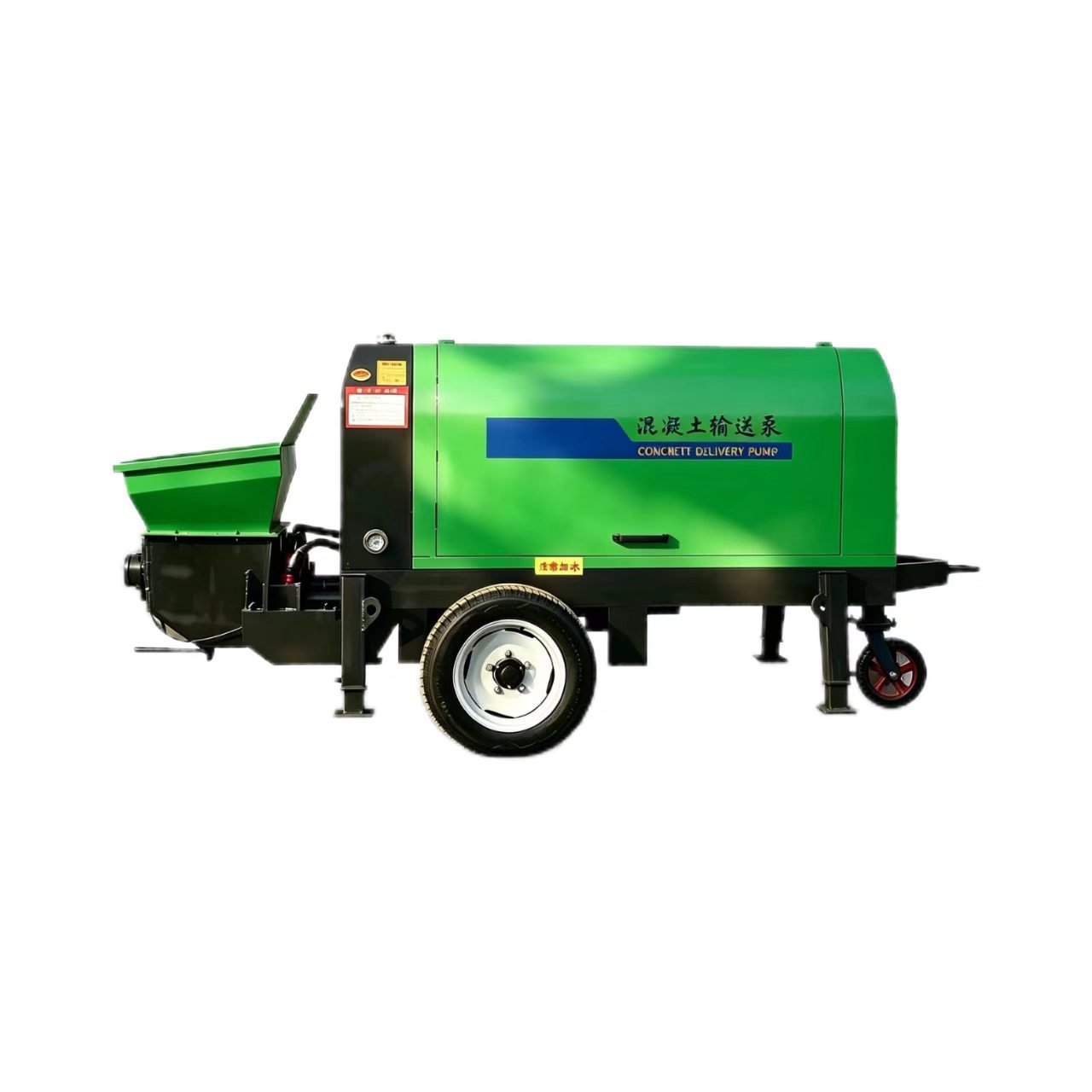
Concrete pump truckIt mainly solves the problem of vertical and horizontal transportation of concrete, and is suitable for floor pouring, bridge engineering, reservoir dam, tunnel lining and other scenes that require a large amount of continuous concrete pouring. Its maximum vertical conveying height of 200 meters, horizontal distance of 550 meters, can handle 0.5-30mm aggregate, is the core equipment of concrete construction.
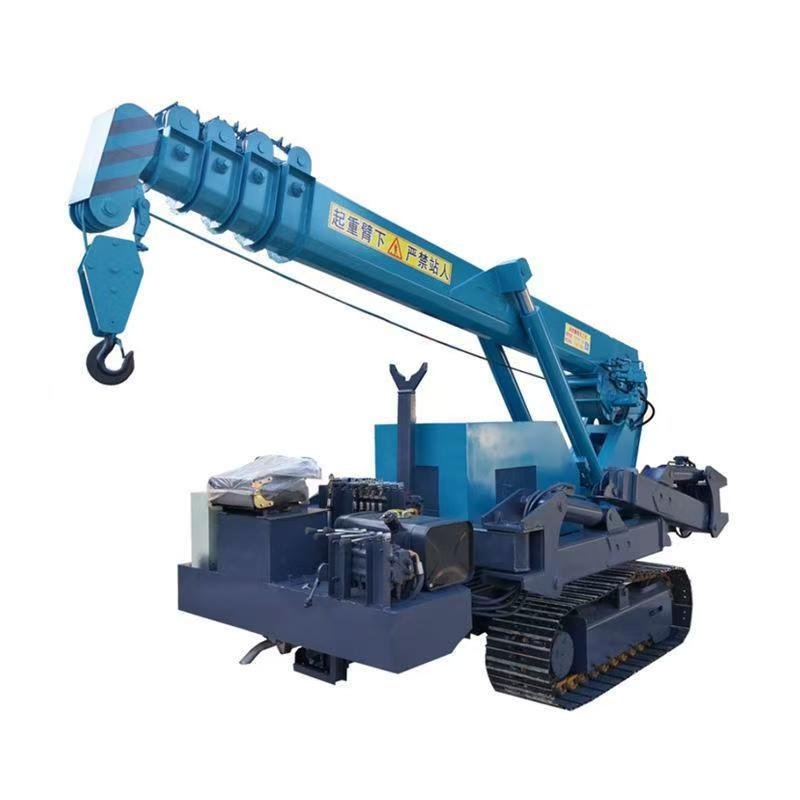
Spider craneIt focuses on lifting and hoisting in narrow spaces, such as power maintenance, glass curtain wall installation, factory workshop equipment maintenance, municipal gardens, etc. Its rubber crawler chassis does not damage the ground, can enter the standard door opening, elevator and staircase, and can continuously rotate 360 degrees to realize all-round hoisting, which is an ideal alternative when large cranes cannot be deployed.
Technical Comparison
The two have their own characteristics in power, control and structure. The concrete delivery pump provides electric and diesel dual power, the electric version is suitable for urban construction sites, and the diesel version is suitable for off-grid construction; the spider crane also uses oil and electricity dual power, indoor electricity drives zero emissions, and outdoor use diesel to walk independently. The concrete pump adopts the S-type valve reversing system to ensure the stable transportation of large aggregates; the spider crane adopts the U-shaped high-strength manganese telescopic boom, which has a large working radius and strong load-bearing capacity. The specific parameter comparison is as follows:
| Comparison dimension | Concrete pump truck | Spider crane |
|---|---|---|
| Power type | Electric/diesel dual-power | Dual-fuel power |
| Core features | Concrete pumping | Lifting in confined spaces |
| Maximum conveying/operating capacity | Vertical 200m/Horizontal 550m | Lifting weight 1-8 tons, radius 5-7.8m |
| Key structure | S-type valve switching system | U-shaped high-strength manganese telescopic boom |
| Control method | Electrical control cabinet, one-button operation. | Fully hydraulic control, with precise micro-movements. |
| Applicable space | Open construction sites, high-rise buildings, tunnels | Narrow indoor spaces, floors, and corners |
Selection recommendations
If your project is mainly concrete pouring, such as high-rise buildings, bridges, dams, and requires long-distance, large aggregate transportation,Concrete pump truckIt is the first choice. According to the scale of the project, the model is selected: small secondary structure is selected with inclined fine stone pump (5-8m/h), and large high-rise structure is selected with 40/60 type (30-55m/h). The electric version is suitable for cities, and the diesel version is suitable for remote areas.
If you are facing hoisting problems in a narrow space, such as power maintenance, curtain wall installation, workshop maintenance, and large cranes cannot enter,Spider craneMore appropriate. According to the lifting weight demand, choose 1 ton, 3 ton, 5 ton or 8 ton models, 1 ton working radius of 5 meters, 3 tons of 7.8 meters. Dual fuel power ensures flexible use both indoors and outdoors.
The functions of the two are complementary. If concrete pouring and lifting in narrow space are involved at the same time, they can be purchased separately to cover different construction links. Power configuration, operating space constraints, and long-term operating costs need to be considered when purchasing.