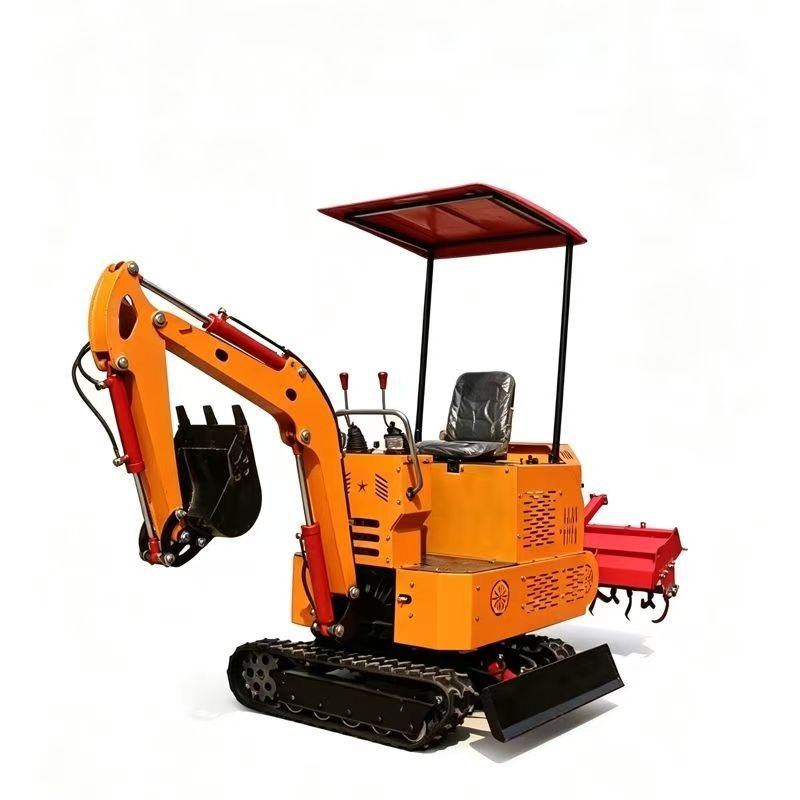
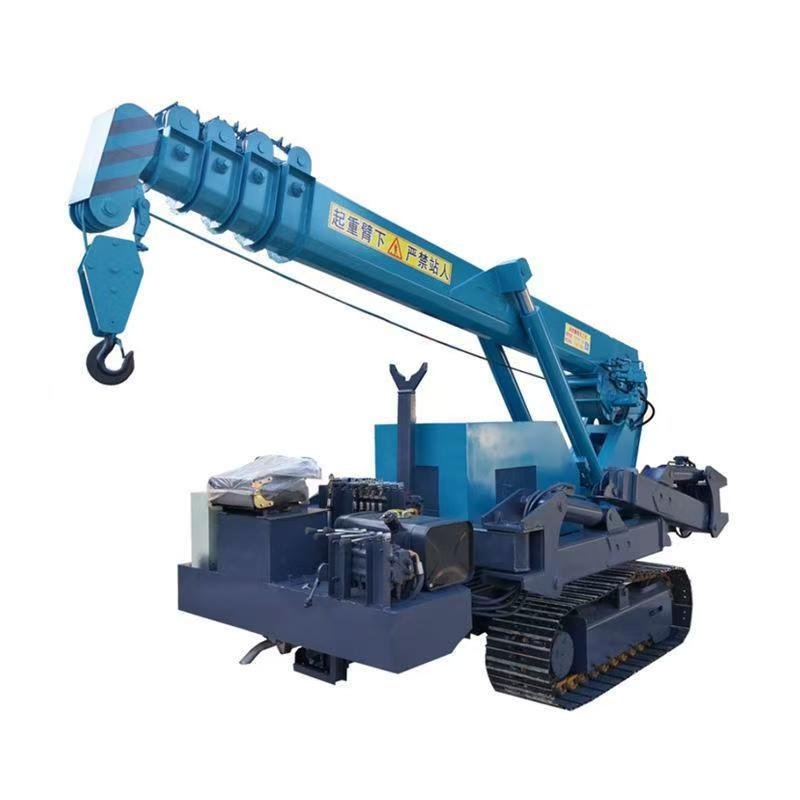
Mini Excavator vs Spider Crane: A Comparison Guide for Narrow Space Work Equipment Procurement
| Dimension | Mini Excavator (Excavator + Rotary Tiller All-in-One) | Spider Crane (Mini Crawler Crane) | Analysis |
|---|---|---|---|
| Dimensions (Length × Width × Height) | 2000×1000×2300 mm | 未提供具体尺寸,但可通过标准门洞 | The mini excavator has a clear size and is suitable for scenes with limited space. The spider crane has not announced its size, but emphasizes passability. The specific model size should be confirmed when purchasing. |
| Track type | 农用橡胶履带/工程钢履带 | 橡胶履带底盘 | Both have rubber track options to protect the ground; mini excavators additionally provide steel tracks, suitable for harsh construction environments. |
| Power type | 柴油发动机 | 油电双动力(柴油/外接电源) | Spider crane power is more flexible, indoor can be electric zero emissions; Mini excavator only diesel, suitable for outdoor operations. |
| Rotational ability | 360度全摆动 | 360度连续回转,60秒/圈 | Both support 360-degree rotation, but the spider crane has a clear rotation speed, and the operating efficiency can be quantified. |
| Control method | 双杆液压控制 | 全液压操控,手柄布局合理 | All are hydraulic control, easy to learn; spider crane emphasizes micro-motion operation, suitable for precise lifting. |
| Core features | 挖掘、旋耕、破碎、抓取等 | 吊装、安装、维修 | Functional positioning is very different, mini excavator focus on earthwork and agriculture, spider crane focus on hoisting, can not be replaced by each other. |
Guide language: why to compare mini excavator and spider crane?
In the narrow space operation, mini excavator (excavator-rotary tiller integrated machine) and spider crane (mini crawler crane) are two kinds of common but different functions of the equipment. The former primarily handles digging and rotary tillage, while the latter specializes in lifting operations. Buyers should select equipment based on actual operating conditions to avoid mismatches. Based on product data, this article objectively compares application scenarios, technical parameters, and selection recommendations to help you make decisions.
1. Application Scenario Difference: Mining vs Lifting
Mini Excavator: A Versatile Workhorse for Earthmoving and Agriculture
The mini excavator adopts the design of pre-digging and post-tillage, which is suitable for orchard management, vegetable greenhouses, mountain reclamation, municipal pipelines, landscaping, indoor demolition and other scenes. Its rubber track model does not hurt lawn tiles, and its steel track model is suitable for harsh construction environments. 360-degree rotation and rapid switching of accessories (bucket, crusher, rotary tiller, etc.) realize multi-purpose of one machine, covering mining, farming, crushing, drilling and other operations.
Spider Crane: Expert in Lifting Operations in Confined Spaces
Spider crane is specially designed for narrow spaces where large cranes cannot be deployed. It provides models of 1 ton to 8 tons. It is suitable for power maintenance, glass curtain wall installation, construction site hoisting, factory workshop maintenance, municipal gardens, exhibition hall construction, hospital equipment installation, etc. Its oil-electric dual power, rubber crawler chassis and prone leg swing leg legs enable it to be stably hoisted in extreme spaces such as indoors, floors and corners without hurting the ground.
2. Technical Comparison: Parsing of Common Parameters
Both are compact, tracked machines, but they differ significantly in their key parameters. The following comparisons are based on common or comparable dimensions, with data derived from product data.
| Comparison dimension | Mini excavator | Spider crane |
|---|---|---|
| Dimensions (Length × Width × Height) | 2000×1000×2300mm | No specific dimensions were provided, but it was emphasized that it can pass through a standard doorway. |
| Track type | Agricultural rubber track/engineering steel track | Rubber track chassis |
| Power type | Diesel engine | Dual-power (diesel/external power) |
| Rotational ability | 360-degree full swing | 360-degree continuous rotation, 60 seconds per revolution. |
| Control method | Dual-rod hydraulic control | Full hydraulic control, reasonable handle layout |
| Core features | Excavation, rotary tillage, crushing, grabbing, etc. | Lifting, installation, and maintenance |
It can be seen from the table that the mini excavator has a clear size and the power is pure diesel; the spider crane has more flexible power and supports electric zero emissions. Both have 360-degree rotation and crawler chassis, but the functional positioning is very different.
3. Selection recommendations: Match based on requirements.
The case of preference for mini excavators
- Earthwork operations are required, such as trench excavation, foundation excavation, and backfilling.
- Agricultural scene: orchard, greenhouse, mountain reclamation, need rotary tillage, weeding, fertilization ditch.
- Multiple attachment requirements: Frequent switching between tools such as crushing, gripping, and drilling is necessary.
- Limited budget and a need for multi-functionality: save on the cost of purchasing multiple devices.
Situations where spider cranes are given priority
- Hoisting as the core: such as equipment installation, glass curtain wall, steel structure assembly.
- Extremely narrow space: stairwell, elevator shaft, indoor floor, large crane can not enter.
- High ground protection requirements: hospitals, exhibition halls, shopping malls, rubber tracks and zero emissions.
- Oil-electric dual power demand: indoor electric, outdoor diesel, flexible energy saving.
If both excavation and hoisting are involved, it is recommended to purchase separately. If the budget is limited, the operation frequency can be evaluated and the high frequency demand can be met first.
4. Purchasing Decision Frequently Asked Questions
See the FAQ below.