Mini excavator vs log push table saw: purchase selection comparison guide
| Dimension | Mini Excavator (Excavator + Rotary Tiller All-in-One) | Multi-functional Log Push-Table Saw | Analysis |
|---|---|---|---|
| Power type | 柴油发动机 | 纯铜芯电机(7.5/11/15KW可选) | The diesel engine is suitable for the scene without power supply in the field, and the motor is suitable for the fixed workshop. The power supply conditions of the working environment shall be considered in the procurement. |
| Mobility | 履带自行走,轻型卡车运输 | 固定式,需安装或移动不便 | The mini excavator can walk autonomously and quickly transfer to the field. The push table saw needs to be fixed and installed. The mobility difference determines the operation mode. |
| Operation method | 双杆液压控制,360度旋转 | 集成控制面板,推台送料 | The hydraulic control is flexible but requires simple training, and the CNC panel is easy to use, both of which reduce dependence on skilled workers. |
| Core features | 挖掘、旋耕、破碎、抓取、钻孔等 | 圆木截断、分片、开板 | Mini excavators are versatile, push table saws focus on wood cutting, procurement needs to clarify the core operating requirements. |
| Processing capacity | 挖掘深度/宽度依附件而定 | 最大加工直径500mm,长度0.5-6m | The processing capacity of the push table saw is quantified and clear, and the capacity of the mini excavator depends on the attachment and needs to be evaluated according to the specific task. |
| Applicable scenarios | 农业、园林、市政、小型工程 | 家具、木材加工、托盘、包装 | There is little overlap between the two scenarios, and procurement decisions are primarily based on the type of business, not the comparison of parameters. |
Introduction
In the fields of agriculture, gardening, municipal administration and wood processing, buyers often face the problem of equipment selection: is it to choose a mini excavator with multiple functions, or a log push table saw focusing on log cutting? Based on product data, this paper makes an objective comparison from the dimensions of application scenarios, technical parameters and purchasing decisions to help you make a wise choice according to actual needs.
Differences in application scenarios
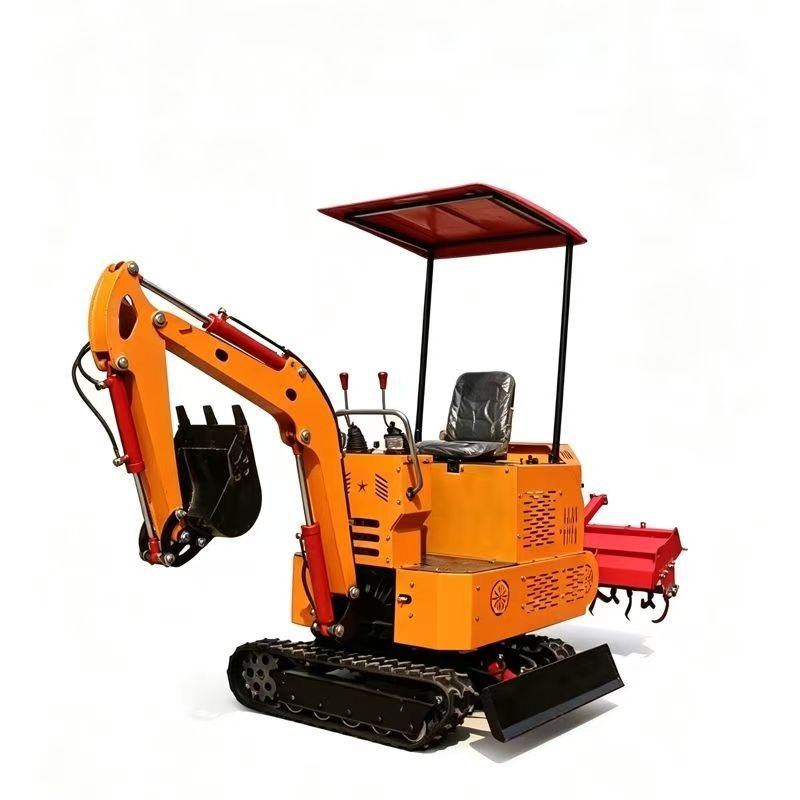
Mini excavator (excavator-tiller combination machine)Primarily intended for earthmoving and agricultural operations. Its pre-excavation and post-tillage design covers the functions of excavation, crushing, grabbing, drilling, rotary tillage, and rectification, and is suitable for orchard management, vegetable greenhouses, mountain reclamation, municipal pipelines, landscaping, indoor demolition and other scenes. Agricultural rubber tracks are designed to protect the ground, while engineering steel tracks are suitable for harsh construction environments.
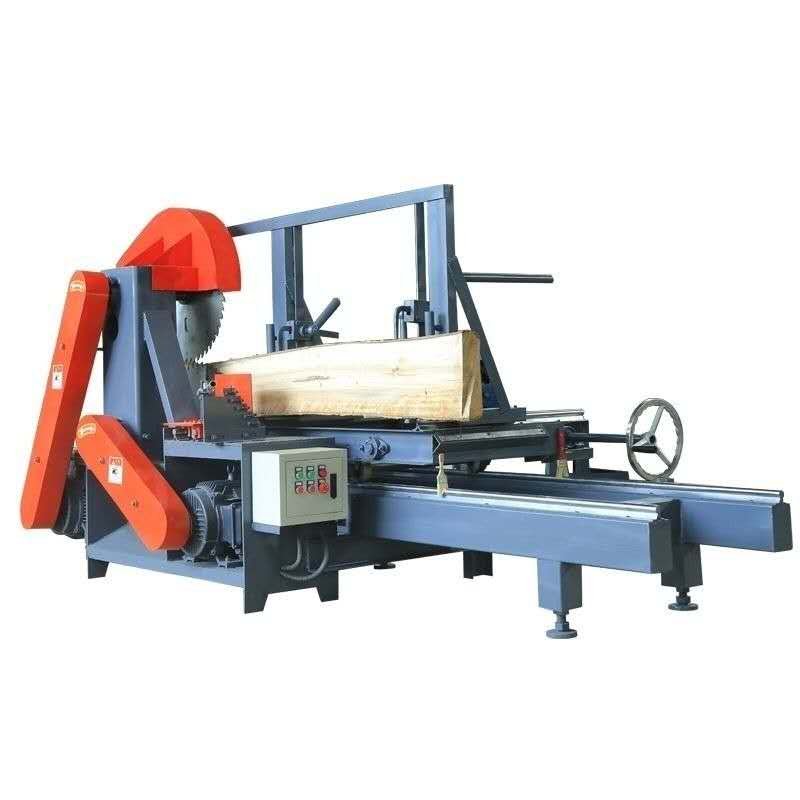
Multi-functional circular log table sawIt specializes in the wood-processing sector, serving applications such as furniture manufacturing, woodworking plants, wooden pallet production, construction timber cutting, and panel cutting for packaging. Its dual-blade design integrates log cutting, slicing, and planing into a single process, making it ideal for batch processing.
In short, the mini excavator is a "mobile multi-functional engineering platform", while the log push table saw is a "fixed professional wood cutting equipment". The application areas of the two almost do not overlap; procurement decisions depend first and foremost on your business type.
Technical Comparison
Due to the large difference in the functional positioning of the two products, there are fewer common parameters. The following is a comparison from the dimensions of the buyer's concern:
| Comparison dimension | Mini excavator | Log push table saw |
|---|---|---|
| Power type | Diesel engine | Pure copper-core motor (7.5/11/15kW optional) |
| Mobility | Tracked self-propelled, transported by light truck | Fixed type; installation is required or it is inconvenient to move. |
| Operation method | Dual-cylinder hydraulic control, 360-degree rotation | Integrated control panel, sliding table feed |
| Core features | Excavation, rotary tillage, crushing, gripping, drilling, etc. | Log cutting, slicing, and edging |
| Processing capacity | Excavation depth/width depends on the attachment. | Maximum machining diameter: 500 mm; length: 0.5–6 m. |
| Applicable scenarios | Agriculture, landscaping, municipal works, small-scale construction projects | Furniture, wood processing, pallets, packaging |
The advantage of mini excavator lies in multi-function integration and mobility, which is suitable for scenes requiring on-site mobile operation. The advantage of log push table saw lies in professional cutting efficiency and precision, which is suitable for batch processing in fixed places.
Selection recommendations
Choose a mini excavator if:
- You are engaged in agricultural cultivation, orchard management, landscape gardening, or small-scale earthwork projects;
- A single machine is needed to perform multiple tasks, including excavation, rotary tillage, and crushing.
- The operation site is scattered, requires frequent transfer, and the road is narrow;
- When ground protection is a priority (e.g., lawns, paving tiles), rubber track models are more suitable.
- With a limited budget, we hope to use a single device for multiple purposes to reduce procurement costs.
When choosing a circular saw with a sliding table, if:
- You operate a furniture factory, a wood processing plant, a wooden pallet factory, or a packaging plant;
- The primary requirement is to cut logs into boards or lumber.
- Pursuing high cutting efficiency (2–3 cubic meters per hour) and precision (error<0.5mm);
- It is necessary to process large-diameter logs (up to 500 mm) or long materials (up to 6m in length);
- We hope to improve the dust conditions in the workshop; a fully enclosed dust collection hood would be a significant plus.
If you are involved in both agriculture and wood processing, it is recommended to prioritize your purchases based on the frequency of your core business. The return on investment logic of the two devices is different: mini excavators quickly return to their capital by replacing labor and multi-machine leasing, and log push table saws create value by improving the yield and cutting efficiency.
Frequently Asked Questions
Q: Can a mini excavator be used for cutting wood?
Answer: You cannot directly cut logs. Mini excavators can be equipped with grab, crusher and other accessories to handle wood handling or crushing, but they cannot open the board accurately like push table saws. If wood processing is required, a circular saw with a sliding table should be selected.
Q: Can a circular sliding table saw be used for mobile outdoor operations?
Answer: The equipment is of fixed design. Although it can be installed on the construction site, it needs to be moved by forklift or hoisting, which is not suitable for frequent transfer. If you need to work on the move, a mini excavator is more suitable.
Q: What is the power and energy consumption of the two devices?
Answer: The mini excavator uses a diesel engine with low fuel consumption and is suitable for a field environment without power supply. The log push table saw adopts a pure copper core motor with a power of 7.5-15KW and a 380V or 220V power supply, which is suitable for fixed workshops.
Question: How do you evaluate the return on investment during procurement?
A: Mini excavator can replace many human workers, according to the current labor cost, usually 6-12 months can recover the cost. The specifics need to be calculated based on local labor costs and workload.